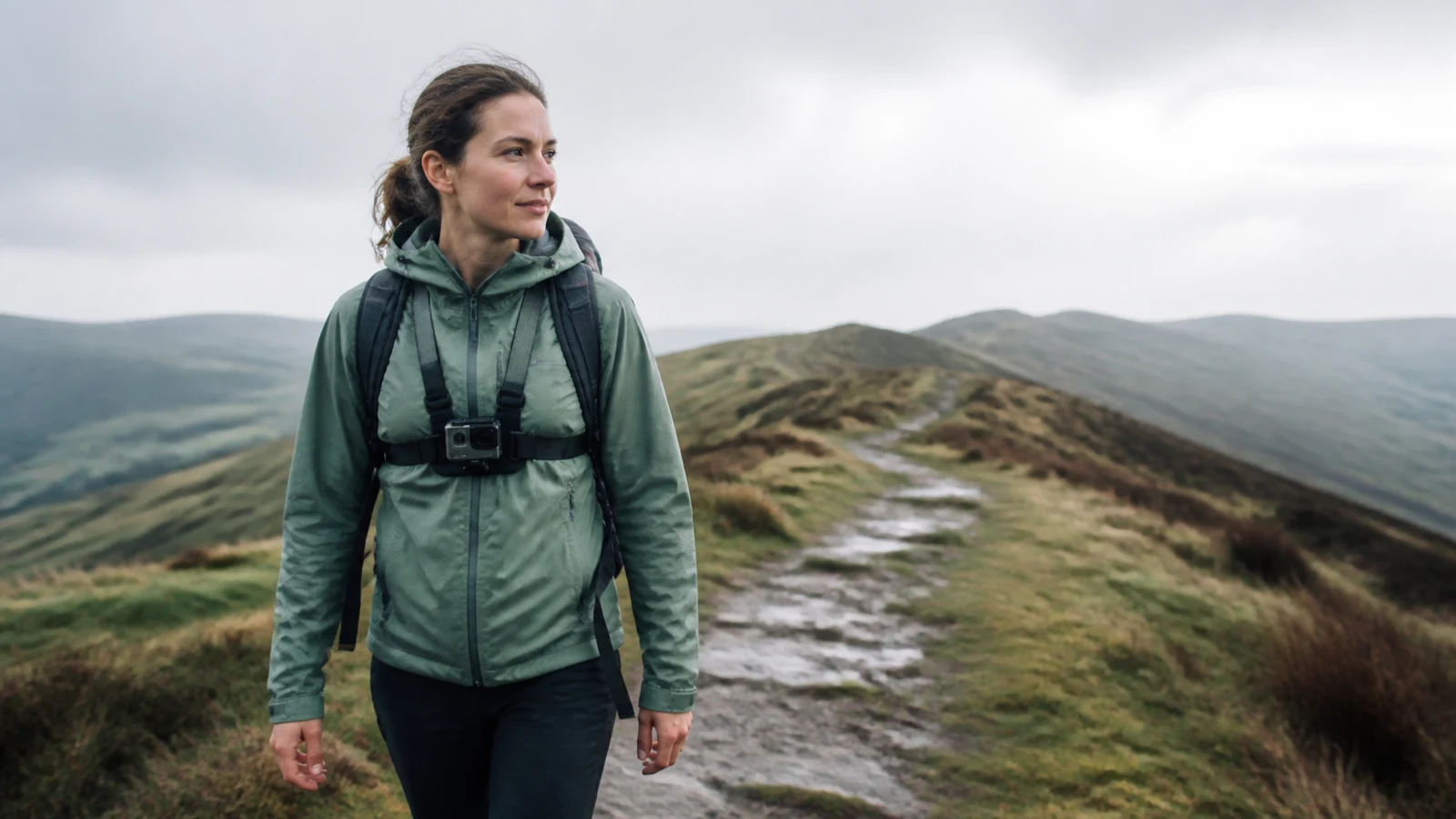
Action camera for hiking UK: a trail-day decision guide
For an action camera for hiking UK use, prioritise pack weight, rain readiness, battery behaviour in cool wind and a comfortable chest mount before headline resolution. A hiking camera should help you capture the route without making the walk harder.
Start with the trail, not the spec sheet
UK hiking often means drizzle, gusts, muddy hands and shorter winter daylight. Hiking-focused comparisons such as HikeLoad action camera guidance for hiking put weight, cold battery behaviour and creative flexibility near the centre of the decision. UK outdoor creator coverage also treats hikers as a distinct use case, as seen in MobileTechWorld UK action-camera review coverage. Broader UK use-case action-camera buying guidance groups hiking and adventure separately from a single generic camera winner.
A practical trail schedule
- Car park setup: fit the chest mount, format the card in-camera and record a ten-second test clip.
- First climb: keep clips short so the day is not spent sorting footage later.
- Ridge or viewpoint: use your highest-quality setting for the few moments that matter.
- Lunch stop: check battery and card space; transfer clips only if the phone has enough power.
- Descent: prioritise stable walking shots over risky hand-held filming.
Hiking checklist
- Chest strap comfort with your jacket and rucksack straps.
- Rain cover, case or careful seal check appropriate to your camera.
- V30/U3 microSD card for 4K recording.
- Spare battery kept warm in an inner pocket.
- Phone with offline maps kept separate from filming drain.
When an action camera is the wrong hiking tool
If you mainly want landscape stills, your phone or a compact camera may be better. An action camera is strongest for movement, POV clips and simple evidence of the walk. It does not replace a map, headtorch, weather judgement or hill-safety kit.
If your main worry is power, continue with the UK action camera battery planning guide. If your main worry is card speed, use the 4K microSD card checklist before your first shoot.